What Are Smart Contracts? Simple Guide With Real Examples
A smart contract is self-executing code on a blockchain that runs automatically when conditions are met. This guide explains how smart contracts work and shows real examples from NFTs and DeFi.
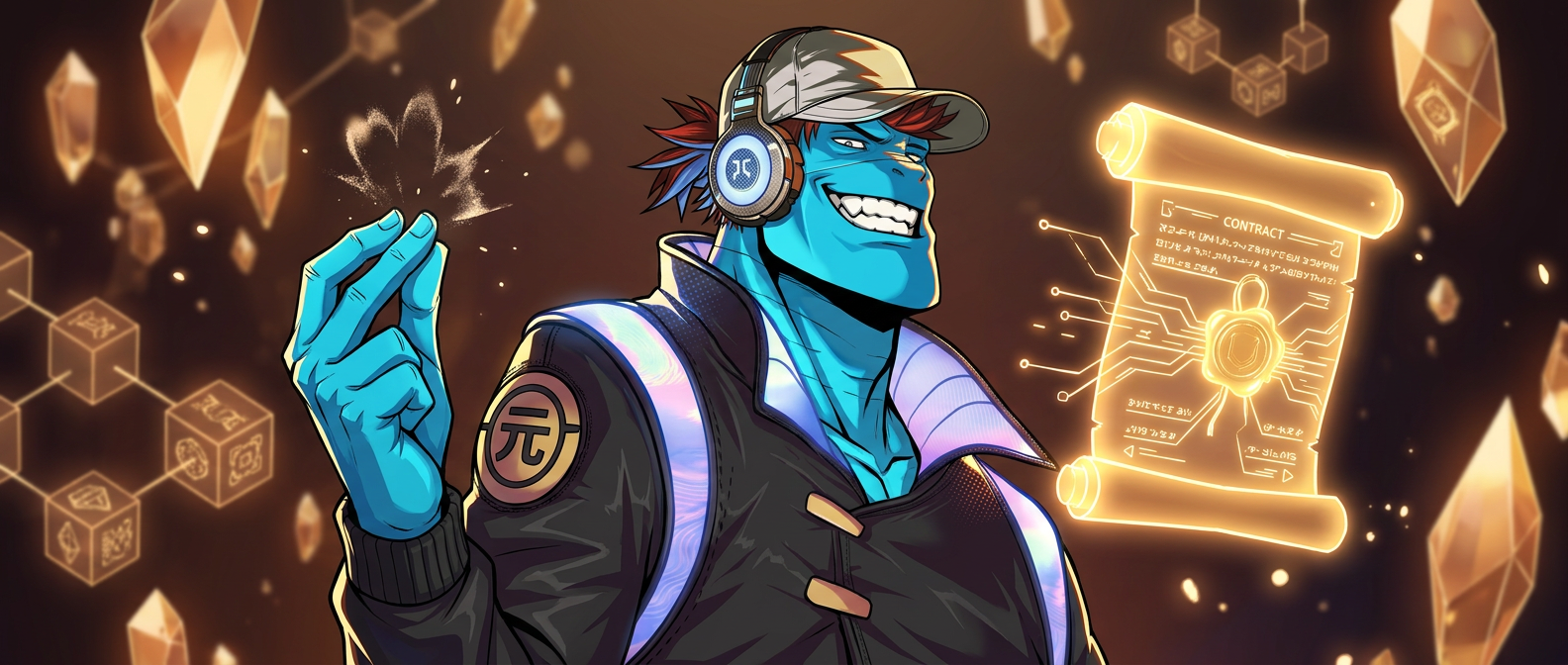
A plain-English guide to what smart contracts are, how they work step by step, real-world examples from NFTs to DeFi, and an honest look at their benefits and limitations.
Smart contracts are the technology that removed the middleman from digital agreements, and they are the engine running behind every NFT, DeFi protocol, and Web3 community in existence today.
A smart contract is self-executing code deployed on a blockchain that runs automatically when conditions are met, with no company, lawyer, or platform needed to enforce it. This guide covers a plain-English definition, how they work step by step, real-world examples beginners will recognize, and an honest look at their benefits and limitations.
What Are Smart Contracts? Simple Definition
A smart contract is a piece of code stored on a blockchain that executes automatically when specific conditions are met. Nobody has to approve it or push a button. The code runs itself.
The simplest way to think about a smart contract is "if this, then that." If you send payment, then the NFT transfers to your wallet. If the loan conditions are met, then the funds release. No human decision is required.
What makes a smart contract different from regular software is where it lives. It is deployed permanently on a blockchain, meaning it cannot be changed, deleted, or overridden by anyone after it goes live.
The word "contract" is accurate but limited. Smart contracts share the logic of legal agreements but replace the enforcer. Instead of a court or a company enforcing the outcome, the code does.
Smart contracts are why NFTs exist in the form they do. Without code that automatically records ownership, transfers assets, and enforces royalties, digital ownership as we know it would not be possible.
Most smart contracts run on Ethereum. Our guide on what Ethereum is and why it powers most NFTs explains why the network became the default platform for smart contract development.
How Smart Contracts Work: Step-by-Step for Beginners
Smart contracts look complex from the outside, but the underlying logic is simple. Here is how they work, one step at a time.
Step one: a developer writes the contract code and defines the exact conditions that will trigger it. Every possible outcome is written into the code before it is ever deployed.
Step two: the contract is deployed to a blockchain like Ethereum. It receives a permanent address on the chain, visible and readable by anyone in the world.
Step three: a user interacts with the contract by sending a transaction to that address. This could be paying ETH to mint an NFT, depositing collateral for a loan, or connecting a wallet to access a community.
Step four: the blockchain checks whether the conditions defined in the contract are met. This check happens automatically, with no human reviewing or approving anything.
Step five: if conditions are met, the contract executes. Assets move, tokens transfer, access is granted, and the result is written permanently to the blockchain.
Step six: if conditions are not met, nothing happens. No funds move, no assets change hands, and the contract simply waits until the right conditions are triggered.
This entire process replaces every intermediary that would otherwise sit between two parties. No bank, no lawyer, no platform, and no approval delay.
Smart contracts are the mechanism that makes Web3 work in practice. Our beginner guide to how Web3 works puts them in context alongside wallets, blockchains, and dApps.
Real-World Examples of Smart Contracts
Smart contracts are not abstract. They are running right now, handling billions in transactions and governing millions of digital assets. Here are the most recognizable examples.
NFT minting is the clearest example of a smart contract at work. When you buy a Jirasan NFT on OpenSea, a smart contract checks that your payment is correct, records your wallet as the new owner, and transfers the token, all in a single automatic transaction.
Jirasan's entire collection of 10,000 pieces is governed by one smart contract on Ethereum. That contract defines what each token is, who owns it, and how it can be transferred, with no company managing any part of the process.
NFT royalties are enforced by the smart contract at the point of sale. When a Jirasan changes hands on a secondary marketplace, the royalty percentage built into the contract flows automatically to the creator without any platform processing the payment.
Token-gated access is another live example. The Jirafam Hub verifies whether a wallet holds a Jirasan NFT by reading the smart contract, granting or blocking access instantly without a login system or manual review.
DeFi lending protocols run entirely on smart contracts. A user deposits ETH as collateral, the contract issues a loan, and if the collateral value drops below a set threshold, the contract liquidates it automatically with no human intervention.
Event ticketing is also moving to smart contracts. A ticket issued as an NFT is governed by a contract that prevents duplication, manages resale rules, and can verify attendance at the door.
NFTs are the most widely recognized output of smart contracts in action. Our complete NFT beginner's guide explains how to buy, hold, and evaluate NFTs built on smart contract infrastructure.
Benefits, Challenges, and Why Smart Contracts Matter
Smart contracts have clear advantages over traditional agreements, and they come with real limitations that are worth understanding before you interact with them.
The biggest benefit is removing trust requirements. Two people who have never met can transact through a smart contract without trusting each other, because the code enforces the outcome for both of them equally.
Transparency is a structural advantage. The code of any smart contract is readable on the blockchain, meaning anyone can verify exactly what it does before they choose to interact with it.
Speed and availability matter too. Smart contracts execute the moment conditions are met, around the clock, without waiting for a business to open or a person to give approval.
The main challenge is that bugs cannot be patched after deployment. If a smart contract has a flaw in its code, that flaw is permanent unless the contract is replaced entirely, which is why independent security audits matter so much before any contract goes live.
The oracle problem is a second real limitation. Smart contracts cannot access real-world data on their own and must rely on third-party data feeds called oracles, which introduces a new trust layer into an otherwise trustless system.
In 2026, smart contracts have clearly delivered in NFTs, DeFi, and community access. The remaining challenge is building interfaces simple enough that everyday users can benefit from them without needing to understand the code underneath.
Smart contracts are central to what Web3 actually means in practice. Our guide on Web3 meaning explained covers how they fit into the broader vision of a decentralized internet.
Conclusion
Smart contracts are the most important innovation in blockchain technology because they are the mechanism that turns a public ledger into a functioning economy, and they are already doing that work at scale today.
This guide covered the plain-English definition of smart contracts, how they work step by step from deployment to execution, real-world examples from NFT minting to DeFi lending, and an honest look at their benefits and limitations. To go deeper on the NFT ecosystem that smart contracts made possible, our guide on NFT meaning explained covers the full picture.
Read Next
- What Is Ethereum? The Blockchain Behind Most NFTs Explained
- What is an NFT? A Complete Beginner's Guide for 2026
- What Is Web3? The Internet's Next Chapter Explained
FAQ:
1. What are smart contracts?
Smart contracts are self-executing pieces of code stored on a blockchain that run automatically when specific conditions are met, with no company or intermediary needed to enforce them.
2. How do smart contracts work?
Smart contracts work by storing conditions in code on a blockchain, then executing automatically when those conditions are triggered by a user's transaction.
3. What is the difference between a smart contract and a regular contract?
The difference between a smart contract and a regular contract is that a regular contract is enforced by a court or a company, while a smart contract is enforced by code that runs automatically on the blockchain.
4. What is the difference between a smart contract and a regular app?
The difference between a smart contract and a regular app is that a regular app runs on company-owned servers and can be changed or shut down, while a smart contract runs permanently on the blockchain and cannot be altered after deployment.
5. What blockchain are most smart contracts built on?
Most smart contracts are built on Ethereum, which introduced programmable blockchain technology and remains the largest smart contract platform by developer activity and total value locked.
6. Can smart contracts be changed after they are deployed?
Smart contracts cannot be changed after they are deployed, which is why security audits before launch are critical and why bugs in live contracts can cause permanent losses.
7. What is the difference between a smart contract and a dApp?
The difference between a smart contract and a dApp is that a smart contract is the backend code running on the blockchain, while a dApp is the full application that uses one or more smart contracts and includes a user-facing interface.
8. Are smart contracts legally binding?
Smart contracts are not automatically legally binding in most jurisdictions, though the asset transfers they produce are generally treated as enforceable because they are recorded permanently on the blockchain.